Slim Aarons Generative Studio
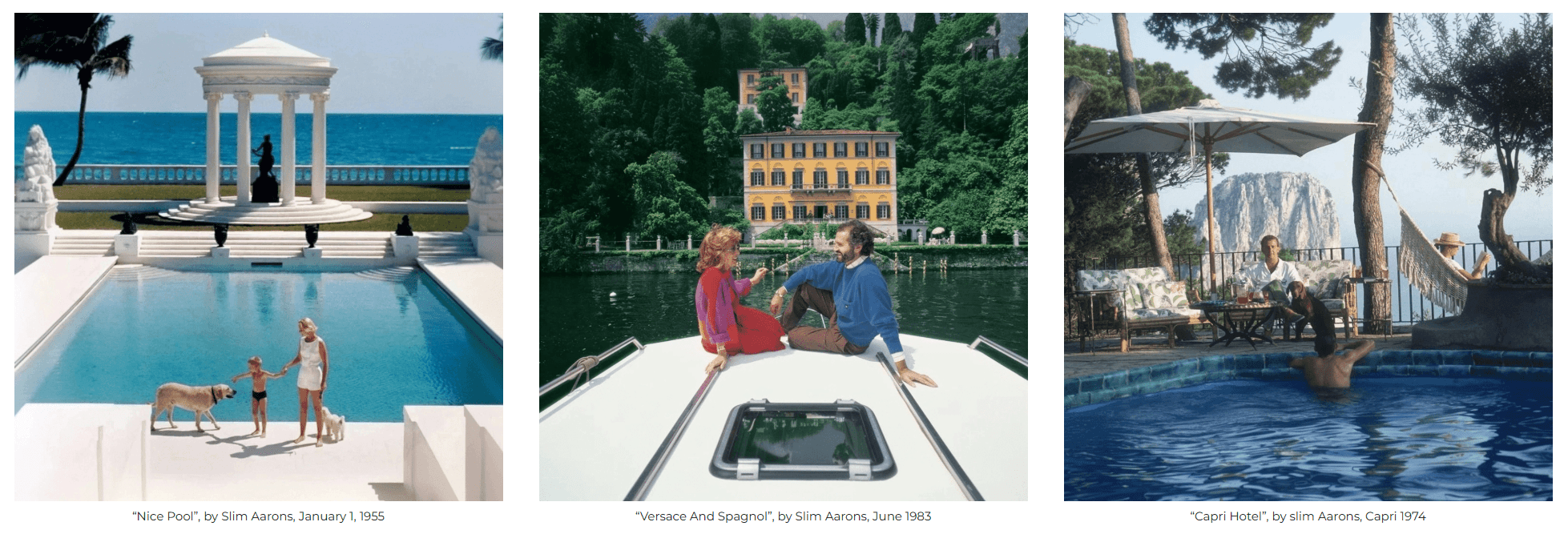
A style-preservation and reinterpretation workflow using LoRA fine-tuning.
This project develops a reproducible pipeline for preserving and extending Slim Aarons’s mid-century photographic aesthetic through ethically transparent generative AI workflows.
Overview
A curated dataset of high-resolution Slim Aarons photographs was used to train a LoRA that captures compositional structure, color palette, lighting, and subject framing without replicating specific originals.
The trained model was deployed through ComfyUI workflows and a Gradio web app, enabling accessible experimentation across text-to-image, image-to-image, editing, animation, and 2D-to-3D outputs.
Methodology and System Design
Data Curation
- 150 high-resolution images selected across eras and locations
- Each image paired with a detailed descriptive caption
- Captions encoded composition, color relationships, lighting, subject positioning, and mood
Prompt and Trigger
A standardized caption structure was introduced, along with a dedicated trigger token:
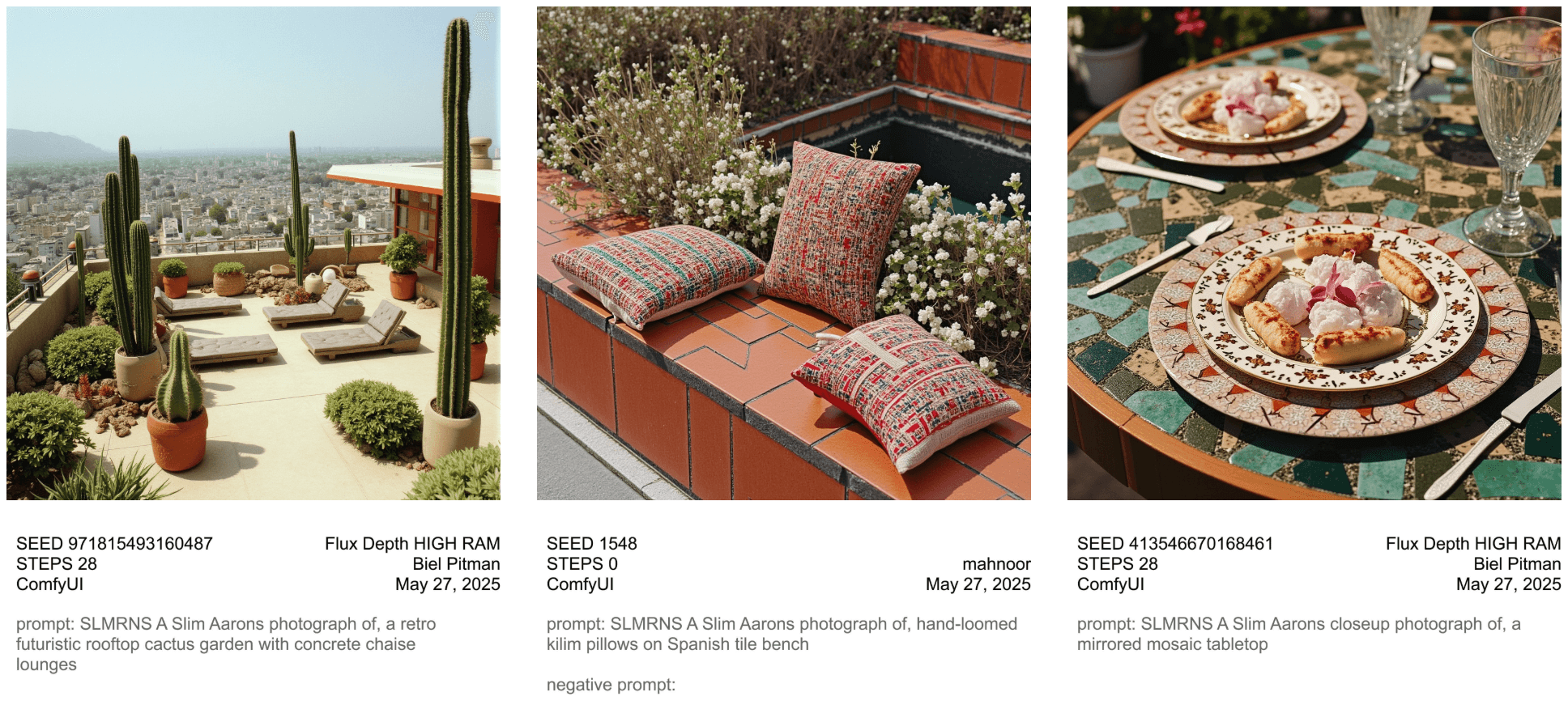
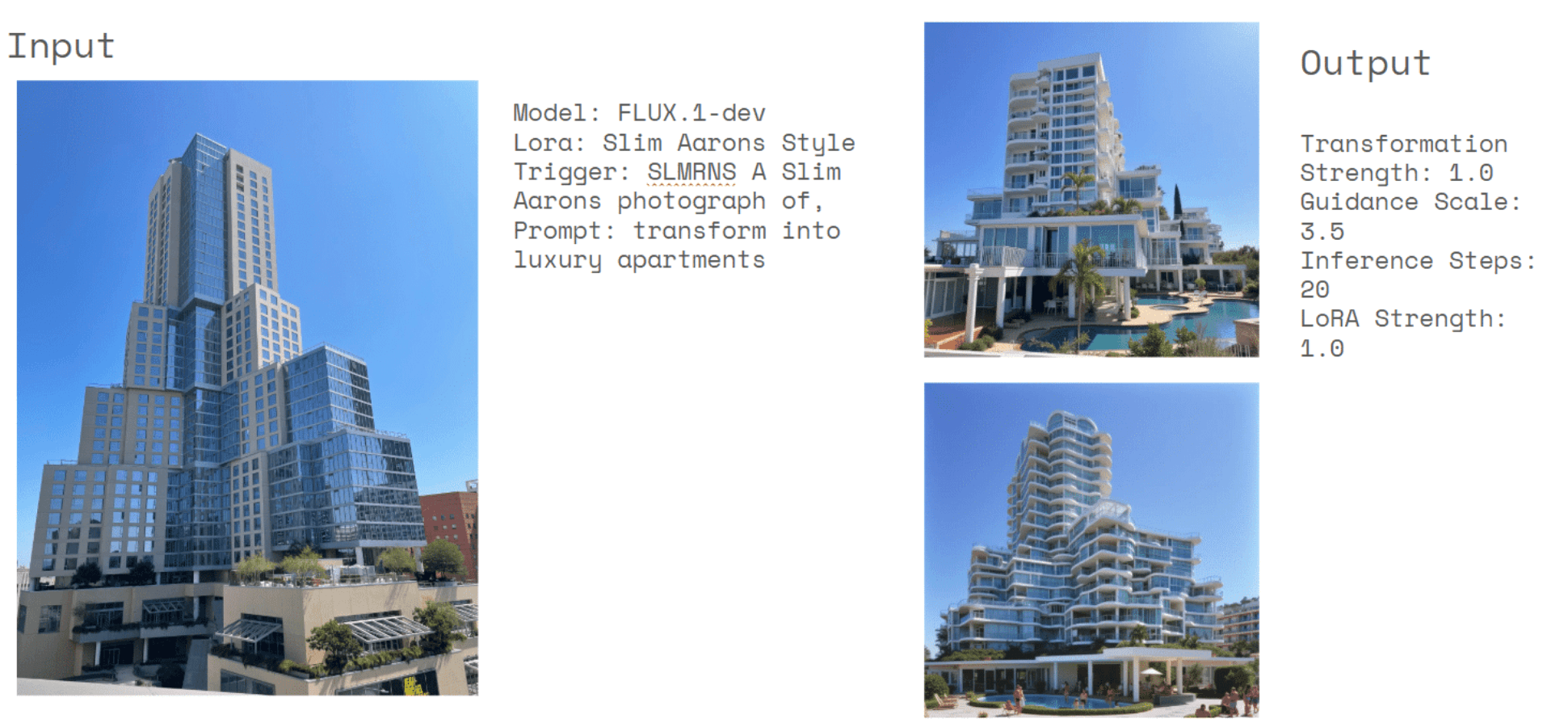
SLMRNS. A Slim Aarons photograph of…
This ensured consistent invocation of the learned style during generation, and provided a clear marker of stylistic conditioning.
Model Strategy
- Base model: FLUX.1-dev
- Fine-tuning method: LoRA
- Rationale: modular, lightweight style injection without altering the base model
Training Setup
- Resolution: 1024 by 1024
- Hardware: a single A100 GPU
- Roughly 2,000 training steps
- Tuned LoRA rank and text encoder parameters
- Periodic checkpoints and sample review for quality assurance
Quality Control
Outputs were evaluated during training for:
- Composition accuracy
- Color fidelity
- Architectural and clothing detail
- Consistency across varied prompts
The final LoRA was exported as a compact safetensors file for reliable reuse.
Gradio Web App
A browser-based interface provides:
- Multiple generation modes
- Sliders for LoRA strength, guidance scale and denoise strength
- Seed control for reproducibility
This enables use by non-technical users in teaching and research contexts.
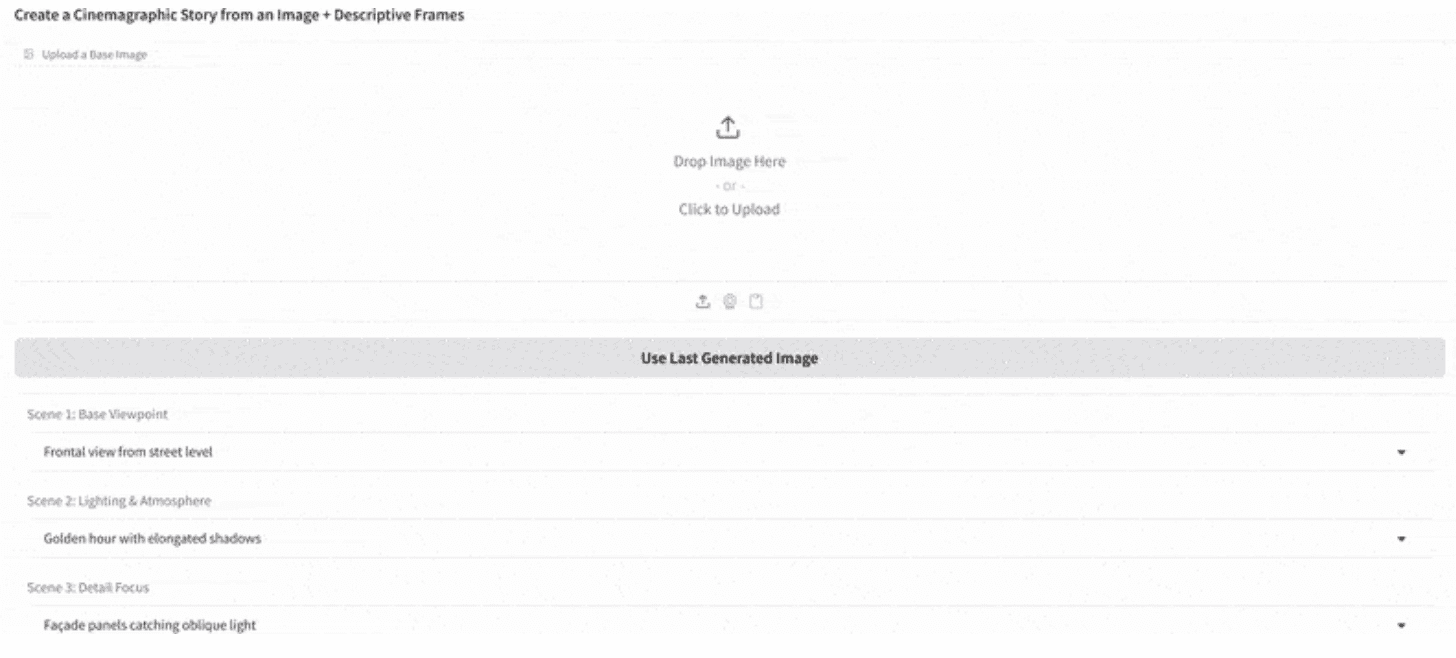
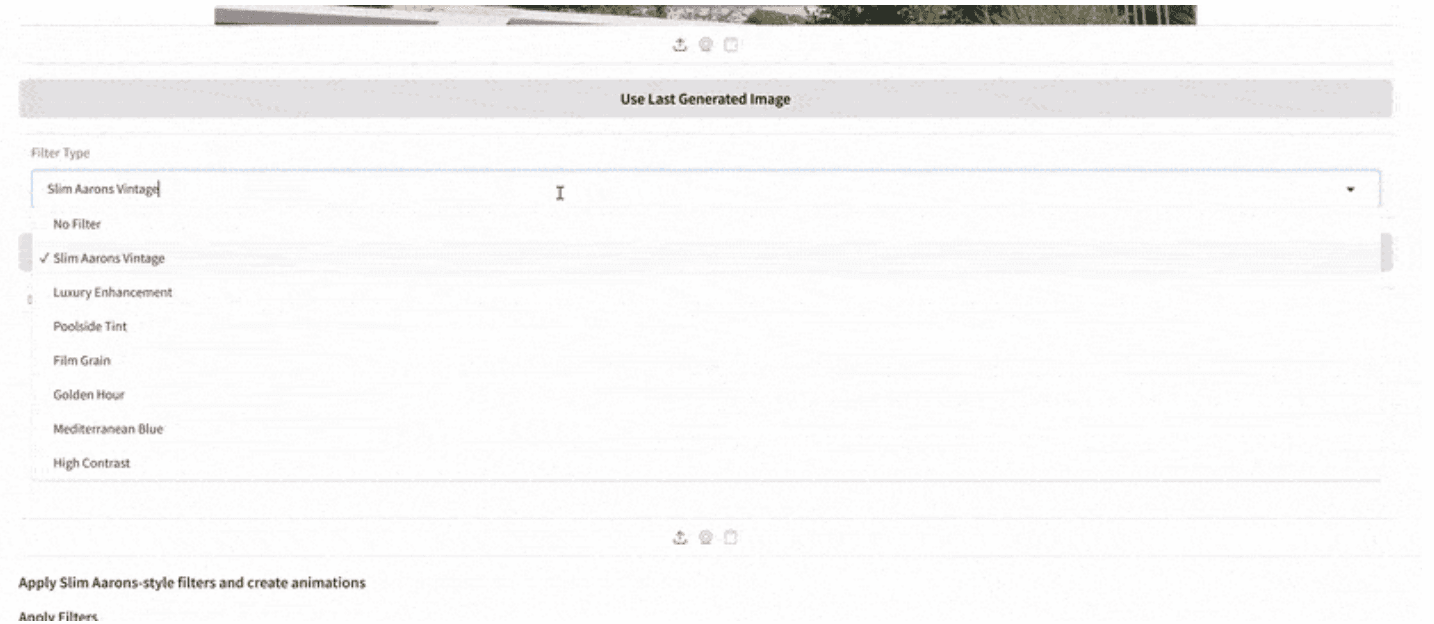
Additional tools generate:
- GIFs and cinemagraphs
- Ken Burns style pan and zoom
- Multi-frame storyboard sequences
These extend still imagery into short-form narrative outputs.
Ethics and Provenance
- Outputs explicitly marked as AI-generated
- Dataset provenance documented
- Internal trigger token retained for traceability
- Project framed as educational and preservational, not substitutive
The project delivers a reproducible Slim Aarons Generative Studio supporting research, teaching, and creative exploration.
Planned extensions include usability testing, rights assessment for broader release, Hugging Face demo deployment, and expansion toward responsibly curated style-preservation toolkits.