The Re-Iterating Maze
A rehabilitative landscape for mindful walking at Alcatraz.
The Re-Iterating Maze reimagines outdoor time at Alcatraz as a meditative practice. Instead of static yards or prescribed routes, inmates encounter continuously regenerating walking paths, transforming movement into reflection through repetition, rhythm, and gradual challenge.
Concept Narrative
In environments defined by confinement and surveillance, choice often becomes an illusion. The Re-Iterating Maze shifts focus away from decision-making and toward the act of walking itself. Inspired by natural hiking trails, the project frames movement as a form of meditation, where the journey replaces the destination and repetition becomes restorative rather than punitive.
Logic Behind The Maze
Purpose: reveal intelligence through process.
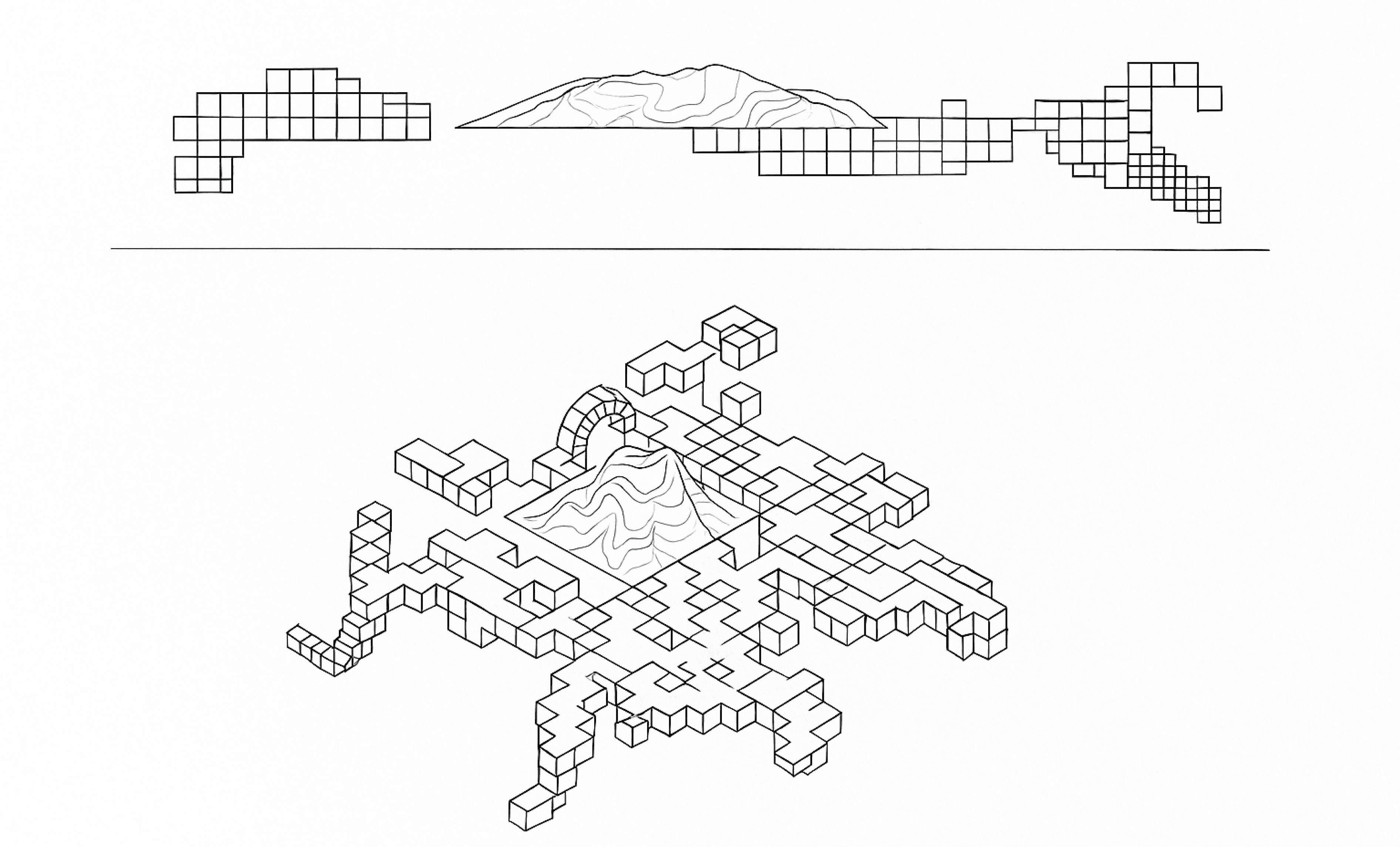
- Curve generation according to site
- Dividing the curve into the points required
- Using Perlin noise to generate paths from points
- Form finding from the Perlin paths
- Voxelization
- Generating the surface between voxels
- Generating pathways with a varying complexity seed
- Applying pathways to the grid to generate maze walls
- Mapping to surface
- Ready for prisoner exploration
Early Exploration
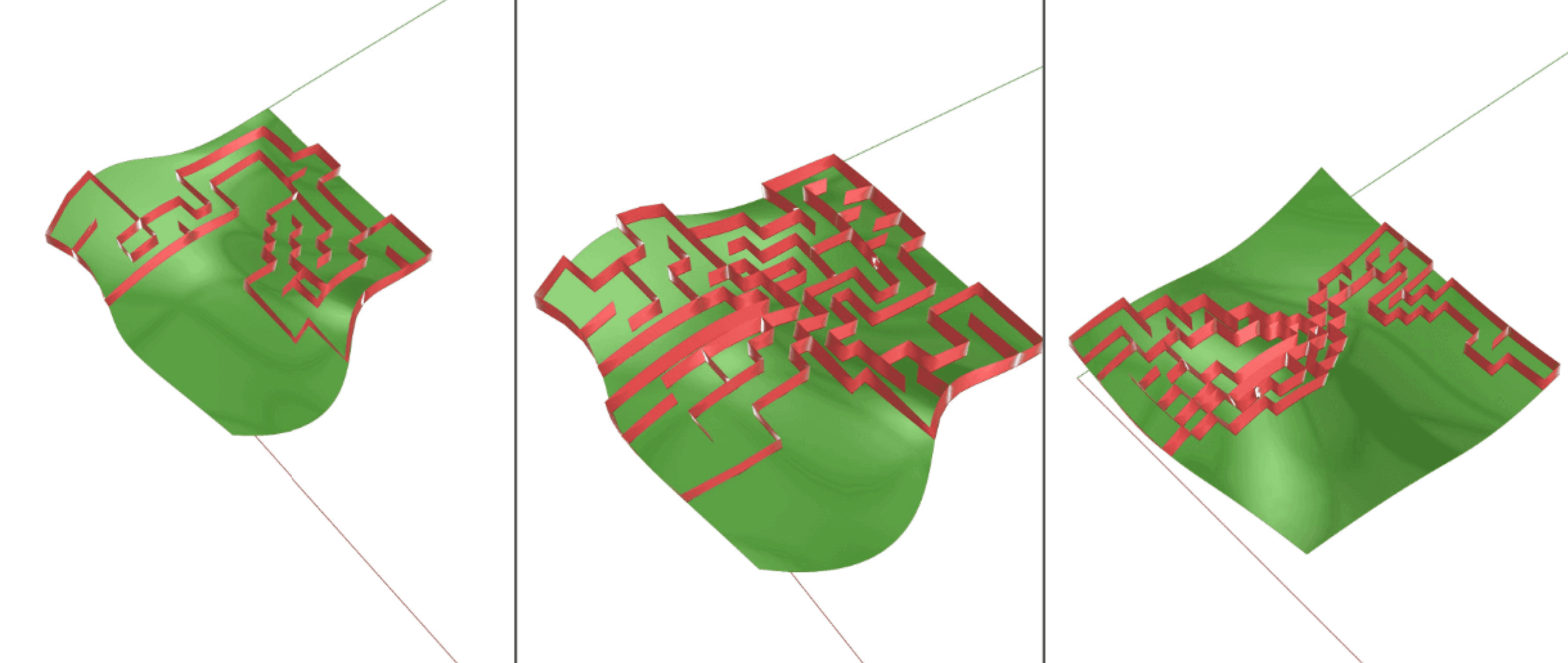
Initial studies explored expressive, organic surfaces draped across the Alcatraz site. These forms created stimulating pathways that deliberately contrasted with the prison’s rigid geometry, introducing individuality, variation, and movement into an otherwise uniform environment.
Intent: test how form alone could support reflective walking.
Maze Generation
The project evolved into a computational maze system that regenerates with every iteration. Each maze produces a single, unbranched, continuous path, removing moments of choice while preserving unpredictability. The logic draws from depth-first search algorithms and hiking trail behaviors, prioritizing flow over decision.
A custom Python workflow controlled:
- Path complexity
- Terrain hilliness
- Seed variation and scale
Parametric Logic
Two primary parameters structured the system:
- Complexity along one axis
- Hill amplitude along the other
This created a gradient of experiences, from simple, calming routes to more demanding, immersive journeys. Voxelized pathways and Perlin noise introduced variation while maintaining continuity across iterations.
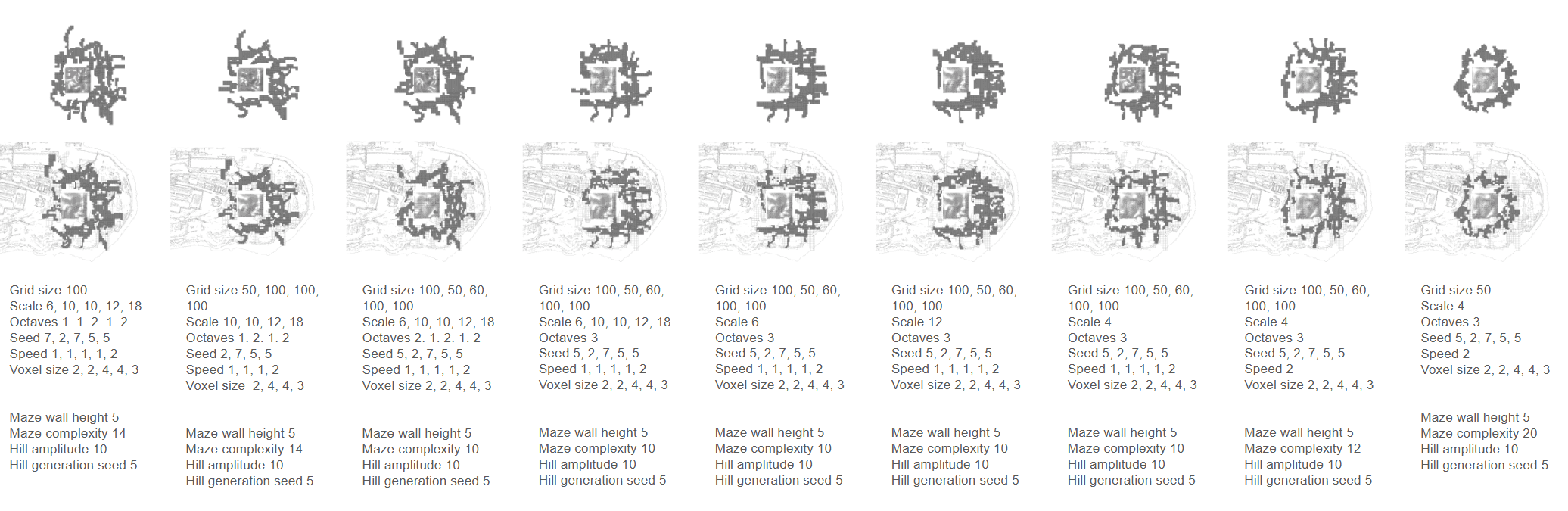
What this diagram says
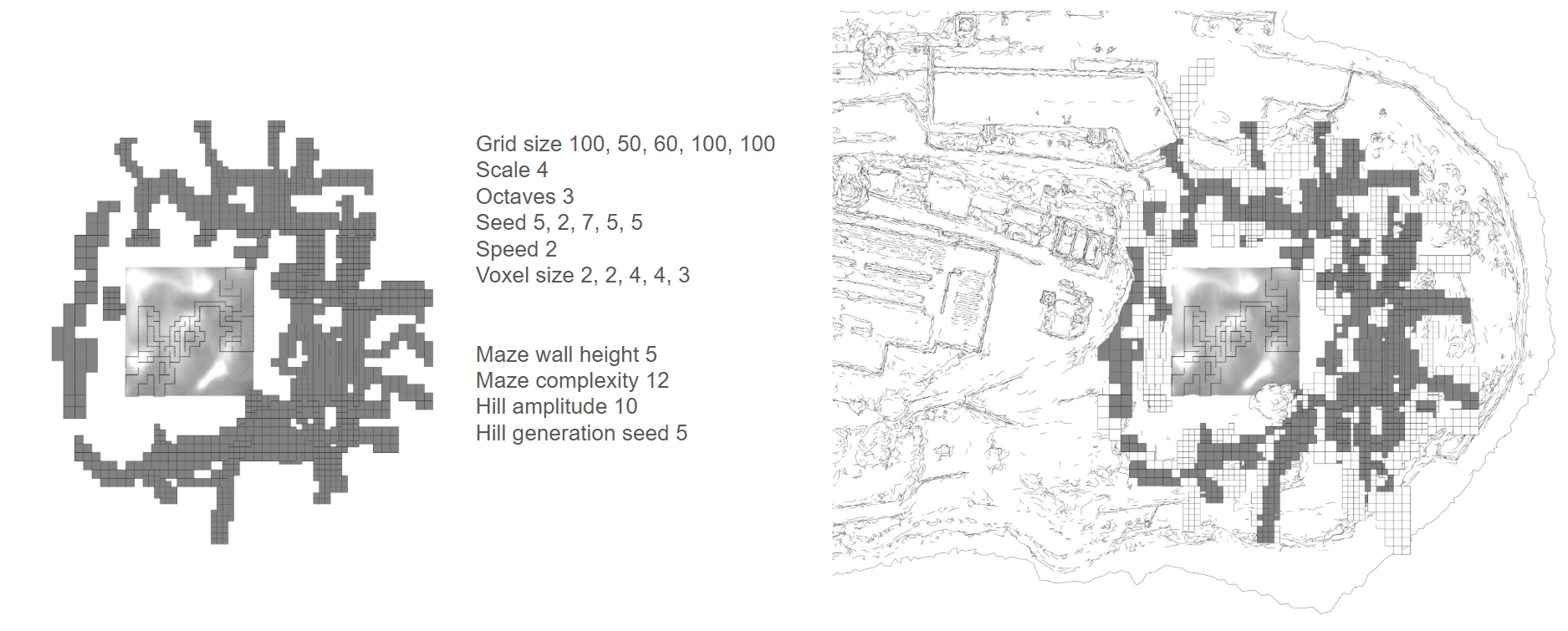
The parameters varied across iterations are grid size, scale, octaves, seed, speed, voxel size, maze wall height, maze complexity, hill amplitude and hill generation seed.
From multiple generated outcomes, Iteration 8 was selected as the optimal balance between path density, site integration, and contemplative rhythm. It offered sufficient complexity to sustain focus without overwhelming the walker, aligning most closely with Alcatraz’s topography and circulation constraints.
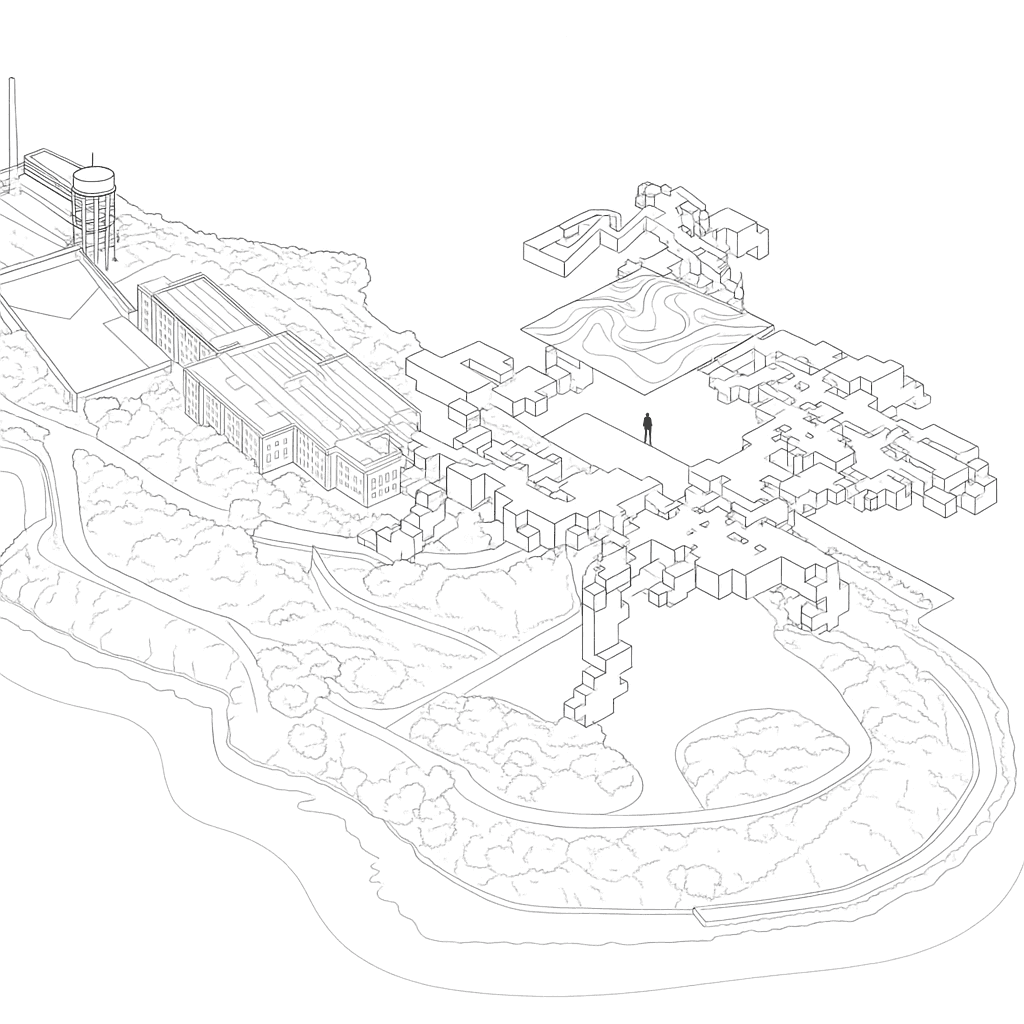
Beyond the central maze, additional walking paths were generated across the island using Perlin noise. These routes frame the maze within the broader landscape, gradually introducing complexity before arriving at the central meditative zone. Together, they form a layered walking experience across the site.
The Re-Iterating Maze proposes rehabilitation not through observation or correction, but through embodied experience. By combining computation, landscape, and ritualized movement, the project reframes walking as a quiet architectural act of care within an otherwise restrictive environment.
Project developed in collaboration with Scott Lebow. You can read the original article on the IAAC blog.